
Tree Health Assessment Services: How to Spot and Prevent Tree Disease
 June 17, 2026 12:00 pm
Trees are valuable long-term assets that improve curb appeal, provide shade, and enhance the overall health of your landscape. However, many tree problems begin long before visible symptoms appear. By the time major decline becomes noticeable, disease, pests, or structural issues may already be advanced.
That is why professional tree health assessment services are essential for maintaining healthy trees and preventing costly damage. Early detection allows property owners to address problems before they spread, helping preserve both tree health and safety.
For homeowners searching for professional tree care in New Jersey, understanding the signs of disease and the importance of proactive assessments can make a significant difference in the long-term health of their landscape.
What Is a Tree Health Assessment?
A tree health assessment is a professional evaluation of a tree’s overall condition. During the inspection, arborists examine factors such as:
- Branch structure
- Leaf condition and canopy density
- Root health and soil conditions
- Signs of insects or fungal activity
- Structural weaknesses or decay
- Environmental stress factors
The goal is to identify existing problems early while also preventing future decline.
Learn more about Frontier Tree’s health assessment services.
Why Tree Disease Often Goes Unnoticed
Unlike annual plants or smaller shrubs, trees can decline slowly over several years. Many diseases begin internally or below ground before symptoms appear in the canopy.
Common issues that often go unnoticed include:
- Root decay
- Soil compaction
- Nutrient deficiencies
- Internal trunk decay
- Early insect infestations
Because symptoms can be subtle at first, routine evaluations are one of the best ways to catch problems early.
Common Signs of Tree Disease
Recognizing early warning signs can help prevent serious damage.
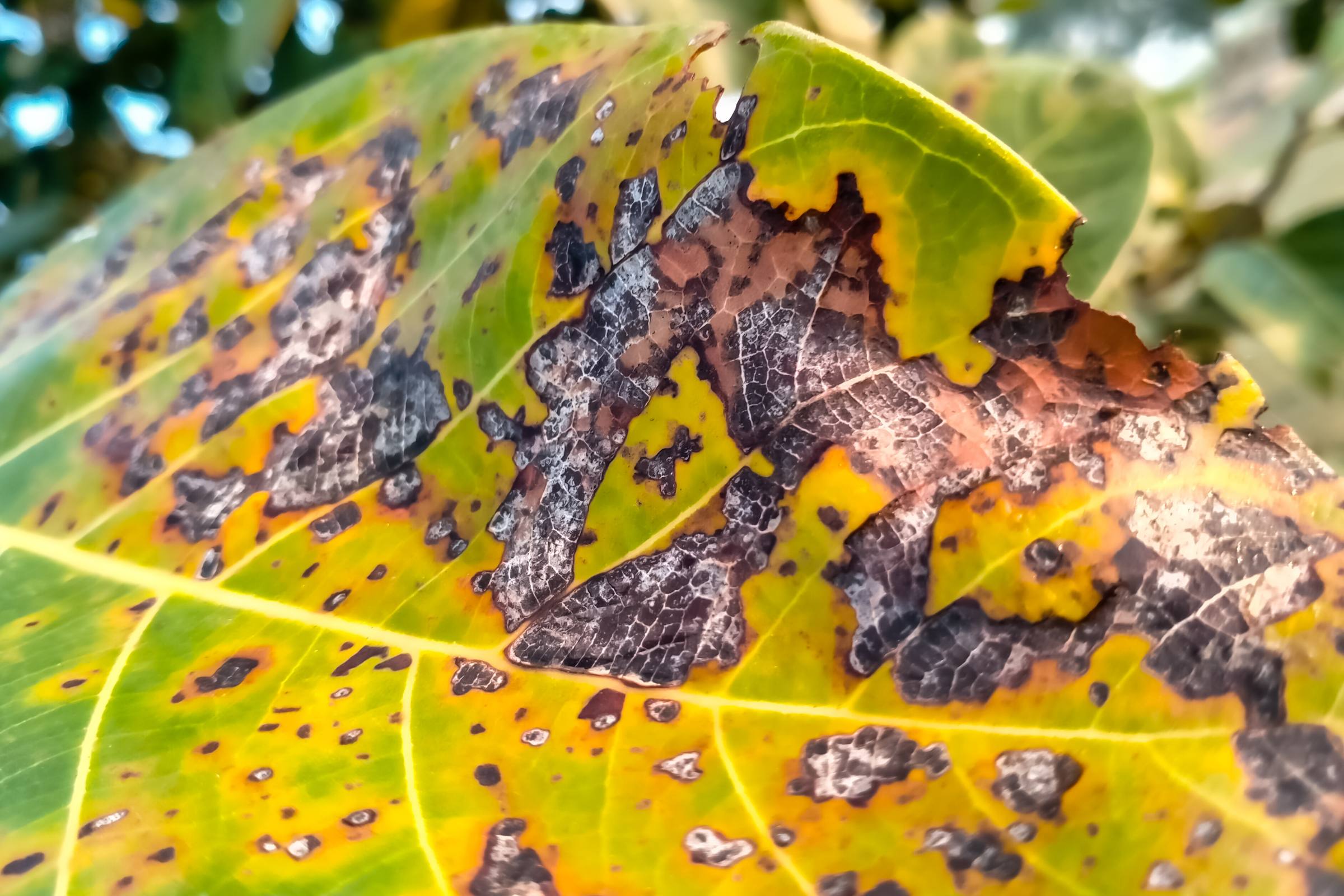
Discolored or Wilting Leaves
Yellowing, browning, or curling leaves may indicate:
- Fungal disease
- Root stress
- Nutrient deficiencies
- Drought stress
Premature leaf drop during the growing season is another common warning sign.
Dead or Dying Branches
Dead limbs in the canopy can indicate structural decline, disease progression, or root issues. Branch dieback should always be evaluated before the problem spreads.
Professional tree pruning services can help remove affected limbs and improve overall tree structure.
Fungal Growth
Mushrooms or fungal growth near the base of a tree often signal internal decay or root rot. While some fungi are harmless, others may indicate serious structural issues.
Cracked or Damaged Bark
Splitting bark, open wounds, or peeling sections can allow disease and insects to enter the tree. Damage caused by storms, improper pruning, or environmental stress should be addressed quickly.
Sudden Leaning or Root Movement
Changes in tree stability may indicate root damage or decay below ground. This can create significant safety concerns if left untreated.
Learn more about soil management and root excavation.
The Role of Tree Health Assessments in Disease Prevention
Preventive care is far more effective than reactive treatment. Professional assessments help identify risks before they lead to severe decline or removal.
Early Detection Saves Trees
Many diseases can be slowed or managed when identified early. Arborists can recommend targeted treatments before the issue spreads throughout the tree or nearby plants.
Improves Long-Term Tree Health
Routine evaluations help ensure trees receive proper pruning, fertilization, and soil care based on their condition and environment.
Reduces Safety Risks
Weak limbs, decay, and structural instability can become dangerous during storms. Assessments help identify hazards before failure occurs.
Protects Landscape Investments
Mature trees add significant value to residential and commercial properties. Preventive care helps preserve that investment.
Common Tree Diseases in New Jersey
Trees throughout New Jersey are vulnerable to a variety of diseases depending on species and environmental conditions.
Common concerns include:
- Anthracnose
- Fire blight
- Root rot
- Powdery mildew
- Beech leaf disease
- Dutch elm disease
Environmental stress, poor soil conditions, and insect infestations often increase vulnerability to these problems.
Explore Frontier Tree’s insect and disease management services.
How Soil Health Impacts Tree Disease
Healthy soil is the foundation of healthy trees. Trees growing in compacted or nutrient-poor soil are more likely to experience stress and disease.
Professional soil evaluations can identify:
- Nutrient deficiencies
- Compaction issues
- Drainage problems
- Root oxygen limitations
Correcting these issues improves tree resilience and supports long-term health.
Learn more about tree fertilization services.
When Should You Schedule a Tree Health Assessment?
Property owners should consider scheduling assessments:
- After severe storms
- When trees show visible decline
- Before construction projects
- During prolonged drought or heat stress
- As part of routine property maintenance
Routine evaluations are especially important for mature trees and high-value landscape specimens.
Protect Your Trees with Professional Tree Health Assessments
Tree disease and decline rarely happen overnight. In most cases, there are early warning signs that can be identified and addressed before major damage occurs.
Professional tree health assessment services help protect your trees, reduce safety risks, and improve the long-term health of your landscape. Whether you are concerned about visible symptoms or simply want to maintain healthy trees, proactive care is one of the best investments you can make.
If you are looking for expert tree health assessment services in New Jersey, Frontier Tree is ready to help.
Contact us today to discuss your tree care needs and schedule service.
Frequently Asked Questions About Tree Health Assessments
What does a tree health assessment include?
A tree health assessment evaluates canopy condition, branch structure, roots, soil health, insect activity, disease symptoms, and overall tree stability.
Can tree disease be treated?
Many tree diseases can be managed successfully when detected early. Treatment depends on the specific disease and the condition of the tree.
How often should trees be inspected?
Most properties benefit from professional tree evaluations every 1 to 3 years, depending on tree age, condition, and environmental stress.
What are the most common signs of tree decline?
Common symptoms include leaf discoloration, branch dieback, fungal growth, bark damage, and poor growth.
Can unhealthy soil make trees more vulnerable to disease?
Yes. Poor soil conditions weaken root systems and reduce the tree’s ability to resist pests, drought, and disease.
Should I remove a diseased tree immediately?
Not always. Many trees can be treated or stabilized if the problem is identified early. A professional assessment helps determine the best course of action.
Can pruning help prevent disease?
Yes. Proper pruning improves airflow, removes infected branches, and reduces stress on the tree.
Are tree health assessments important after storms?
Absolutely. Storms can create hidden structural damage that may not be immediately visible.
Categorized in: Tree Health